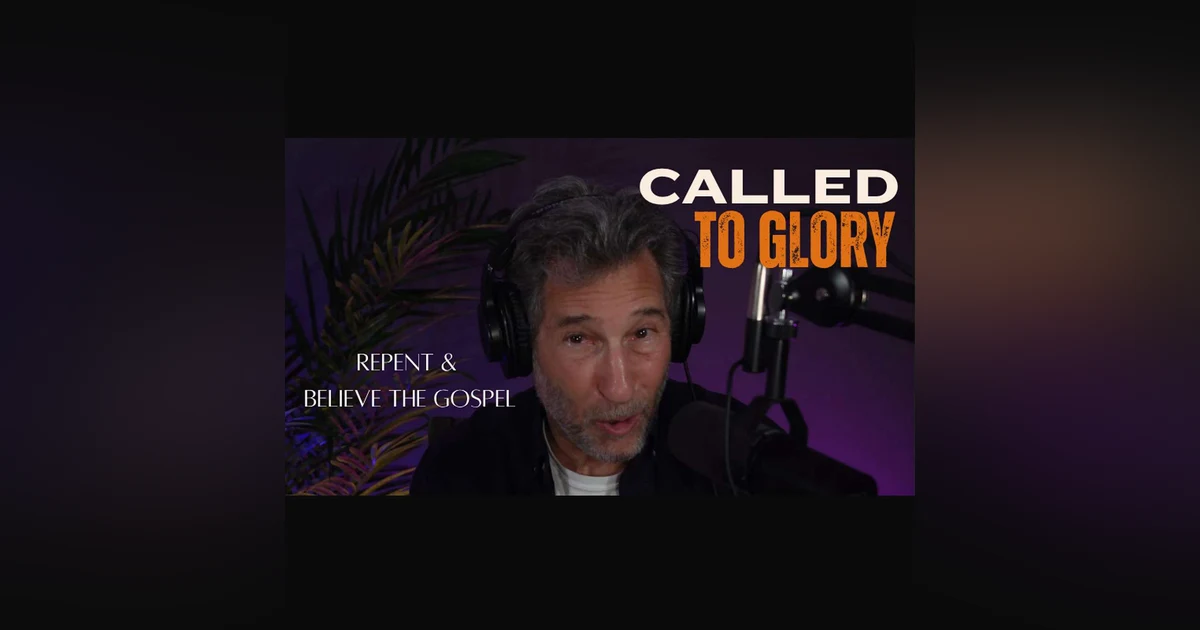
Repent & Believe the Gospel


 RSS Feed
 Welcome to “Called to Glory,” the cutting-edge weekly podcast dedicated to helping you know Christ, the power of His resurrection and the fellowship of His sufferings. If this is your first time tuning in, please be sure to like, share, comment, and subscribe.
In this premiere episode of my new series "Walking in the Light," we’ll be looking at what the Bible says it means to repent and believe the gospel. This is extremely important because contrary to popular Christian teaching, genuine repentance is the threshold requirement not only for forgiveness of sins but also for justification and salvation. In other words, no repentance, no forgiveness of sin, no justification and no salvation.
So with that in mind, join me as we take an honest and no holds barred look at what Christ, John the Baptist and the writers of the New Testament meant when they said to repent and believe the gospel.
Soundtrack music:
"Awakening" by LNDÖ
"Denali" by Bryant Lowry
"Glory Days" by Andreas Kübler
"Tension Rising" by Third Age
Scripture taken from the New King James Version®. Copyright © 1982 by Thomas Nelson. Used by permission. All rights reserved.
Yes, God most certainly is gracious, full of compassion, slow to anger, and great in mercy, but don't let any sweet talking preacher deceive you. If we persist in spurning his grace and walking in unrepentant, willful sin and rebellion, at some point God will withdraw his mercy and give us over to the lies we love. And when that happens, there is no guarantee he will ever show us grace and mercy again. And make no mistake, this is the ultimate destiny of everyone, professing Christian or not, who rejects the truth and the grace of God in favor of loving and practicing a lie. As the writer of Hebrews also said, it is a fearful thing to fall into the hands of the living God. Welcome to Call to Glory, the cutting edge weekly podcast dedicated to helping you know Christ, the power of his resurrection, and the fellowship of his sufferings. If this is your first time tuning in, please be sure to like, share, comment, and subscribe. In this series, we're looking at what the Bible says salvation and the new birth in Christ actually look like. Not just in church, but in real day-to-day life, not only around other believers, but at work, home, when no one is looking, and when no one else is around. And in doing so, we're going to take an honest, candid, and no whole sparred look at how we can know with a reasonable degree of certainty whether we truly are saved and worn again. We'll begin with repentance. Now this is extremely important because contrary to popular Christian teaching, genuine repentance is the threshold requirement not only for forgiveness of sins, but also for justification and salvation. In other words, no repentance, no forgiveness of sin, no justification and no salvation. So let's look at what Christ, John the Baptist, and the writers of the New Testament meant when they said to repent and believe the gospel. It simply stated, it is first acknowledging that we, you and I, have sinned and fall short of the glory of God, then turning from our rebellion and unbelief to the one true living God, and then believing in our heart what He has said about Christ and His kingdom. But before we go any further, let me make one very important point. Now while it is certainly true that the New Testament, with the possible exception of Matthew's gospel, was originally written in Greek, it is a thoroughly Jewish book from start to finish. Why should we expect anything else? John the Baptist, the apostles, and Christ Himself were all Jewish men, deeply immersed in Hebraic thought, culture, and most importantly the Hebrew scriptures, or the Old Testament, if you will. What they said and wrote must therefore be read and understood in that light. So for example, when the New Testament speaks of repentance, we can't simply pull out a concordance, look up the meaning of the corresponding Greek word or phrase, and think we've got the full and complete picture. That's a good start, but we can't stop there. We also have to look at how repentance is defined and understood in the Hebrew scriptures. Then and only then will we be able to see and understand things with the same eyes as John the Baptist, the apostles, and Christ himself. Same with other biblical concepts such as faith, love, and the grace of God. Think about it. God sovereignly led the New Testament writers to express uniquely Hebraic thoughts and theology through the lens of Greek language and thought. What better way to not only break down the dividing wall between Jews and Gentiles, but also bring us together as one new man in Christ? He totally turns the wisdom of the world on its head. Just as he did by sending Paul, a devout Jewish man highly trained in the law of Moses and the prophetic Hebrew scriptures, as the apostle to the Gentiles, while sending Peter, a Jewish fisherman, to his Jewish brethren. It's absolutely brilliant. And let me be perfectly clear. Understanding this is one of the keys to rightly reading and interpreting the Bible, as it is written. God has chosen the foolish things of the world to put to shame the wise, and God has chosen the weak things of the world to put to shame the things which are mighty, and the base things of the world and the things which are despised, God has chosen, and the things which are not to bring to nothing the things that are, that no flesh should glory in his presence. But of him you are in Christ Jesus, who became for us wisdom from God, and righteousness and sanctification and redemption, that, just as it is written, He who glories, let him glory in the Lord. So with that in mind, let's look at repentance, exactly what it is and what it is not. Now, first, it's not something we can just conjure at will. It is the gift of God. The scriptures are clear that He must grant us repentance. If you've ever experienced a conviction of the Holy Spirit, you know exactly what I mean. Now, how exactly that works is well beyond the scope of this podcast, and I'm more than happy to leave that to theologians and Bible scholars. For our purposes here, it really doesn't matter. What does matter is that we know and understand that without the grace of God, repentance is impossible. Now this is one of the reasons it is so dangerous to believe the lie that we can live however we want, and then at the very end do a 180, repent, and be saved. Now that may sound good in theory, but in reality that is not how it works, not at all. It is a mirage, and what's more, it is totally antithetical to the spirit of grace. It is a doctrine, not devils. Has the apostle Paul warned, do not be deceived. God is not mocked, for whatever a man sows, that he will also reap. For he who sows to his flesh will of the flesh reap corruption, but he who sows to the spirit will of the spirit reap everlasting life. You see, playing with sin is like playing with fire. It has the power to not only deceive us but harden our hearts and eventually even sear our conscience, and make no mistake. If your conscience has been seared, that means you no longer have any moral compass. You have no true sense of right and wrong, and without that, genuine repentance is impossible, as it is written. Can a man take fire to his bosom and his clothes not be burned? Not only that, this is precisely where lying spirits have the power to deceive us. Not only about our true spiritual condition, but also with lies such as God understands or you're special, so God will give you a break, or the classic, you can always repent tomorrow. And of course the truth is tomorrow is never promised to us. So when we choose to love a lie rather than the truth, little by little Satan is able to lure and draw us into his net until at some point we're snared. The Epistle of James makes this perfectly clear. Let no one say when he is tempted, I am tempted by God, for God cannot be tempted by evil, nor does he himself tempt anyone. But each one is tempted when he is drawn away by his own desires and enticed. Then, when desire has conceived, it gives birth to sin. And sin, when it is full grown, brings forth death. Now that's bad enough. However, the scriptures also warn that at some point God not only gives people over to the lies they love and the idols they worship, but even sends lying spirits and strong delusion upon them in judgment. There are even instances in the Bible where God Himself hardened people's hearts. Now one very well known example of this is when Pharaoh continued to harden his heart through the first five plagues God sent upon Egypt. Now beginning with the sixth plague, however, something changed. From that point on, the Bible clearly says that God hardened Pharaoh's heart, and make no mistake. When that happens, the chances of repenting or even seeing any deed for repentance are next for nothing, and as bad as that is, the consequences of a lifetime spent rejecting the warning and gentle conviction of the Holy Spirit are even more frightening. Let me explain. While it is certainly true that many unsafe people take their last breath with no apparent fear or sense of danger, many others find themselves on their deathbed in a state of utter terror, torment, and despair, partly from the realization that they're about to stand before God carrying the weight of a lifetime of unforgiven sin and spiritual defilement, and that's bad enough. But it is exponentially compounded by the fact that their conscience has been so badly seared they can't even pray, much less repent. They know they need to cry out to God, but it's just not in them. At that point, godly sorrow is impossible. They're spiritually dead and deep inside, they know it. Just as the writer of Hebrews said about Esau after he traded his birthright for bowl of lentils, when he wanted to inherit the blessing, he was rejected, for he found no place for repentance, though he sought it diligently with tears. Let that sink in for a minute. These people no longer have any sense of God's presence, grace, comfort, mercy, love, or forgiveness, only as the writer of Hebrews also warned, a certain fearful expectation of judgment and fiery indignation which will devour the adversaries. Add to this the unmerciful and relentless barrage of taunting accusations and condemnation by the very same demons and lying spirits that seduced and deceived them all their lives, and make no mistake, this is the ultimate destiny of everyone, professing Christian or not, who rejects the truth and the grace of God in favor of loving and practicing a lie. As the writer of Hebrews also said, it is a fearful thing to fall into the hands of the living God, so don't let anyone deceive you. Without godly sorrow, there can be no true repentance, and without true repentance, there is no salvation. This is why there are so many warnings in the Bible about the deceitfulness of sin. Yes, God most certainly is gracious, full of compassion, slow to anger and great mercy, but don't let any smooth talking preacher deceive you. If we persist in spurning his grace and walking in unrepentant, willful sin and rebellion, at some point God will withdraw his mercy and give us over to the lies we love, and when that happens, there is no guarantee he will ever show us grace or mercy again. It's that serious. As it is written, he who covers his sins will not prosper, but whoever confesses and forsakes them will have mercy. So then, what does biblical repentance actually look like? Well, for one thing, it's not simply a change of mind as it is commonly taught, nor is it merely remorse or feeling sorry about your sin. Those are good and necessary, but only the beginning. You can't stop there. Now the Hebrew word for repentance is to Shuva, and it is a lot more than a feeling of guilt or regret. It means to return, has in to turn back to the living God. So in biblical Jewish thought, repentance therefore means a return to the path of righteousness. So there must first be an honest acknowledgement and confession of the fact that we have sinned. Not in the general sense at all have sinned, that will get you nowhere with God. There must be a deep and unfiltered awareness that we personally have sinned. Not only against others, but against God Himself, and don't let anyone deceive you. It is not enough to simply feel sorry or remorseful about what we've done. That is what the apostle Paul described as the sorrow of the world, and in his own words, it only produces death. Rather, we must see ourselves in light of the holiness of God, as he sees us. And that will bring us face to face with the reality that in our present condition we are his enemies and under his judgment. And when this happens, our posture before him can only be like that of Job. I have heard of you by the hearing of the ear, but now my eye sees you. Therefore I abhor myself and repent in dust and ashes. This is the work of the Holy Spirit, and when that happens you will know it. You will be cut to the heart in ways you never thought were possible and for sins you never saw before. You will be deeply grieved by the enormity, weight, and darkness of your sin, broken of all pride, self righteousness, and religious pretense, and on your face speechless before holy God, and that is when we truly begin to see our need for a savior. Not just from the judgment of God, but also for deliverance from the terrible bondage and slavery of sin. Like Paul, you are quiet with everything within you, oh wretched man that I am, who will deliver me from this body of death? Now this is what Paul described as godly sorrow, and it is what produces true repentance, leading to salvation. Just like the tax collector Christ described in Luke chapter 18, who would not even look up to heaven but stood far off and beat his breast, saying, God, be merciful to me, a sinner. And like David cried out to God after Nathan had confronted him about his sins of adultery and murder. Have mercy upon me, O God, according to your loving kindness, according to the multitude of your tender mercies, blot out my transgressions. Wash me thoroughly from my iniquity and cleanse me from my sin, for I acknowledge my transgressions, and my sin is always before me. Against you, you only have I sinned, and done this evil in your sight, that you may be found just when you speak, and blameless when you judge. If you've ever experienced this, you know exactly what I mean. It's something you never ever forget. Like Jacob after he wrestled all night with God, you will walk with a permanent limp. Not literally, of course, but as a result of knowing who and what you can be apart from the mercy and grace of God. It is the ultimate reality check. As it is written, by humility and the fear of the Lord are riches and honor and life. And it is the best thing that could ever happen to you or me. As David also wrote, the Lord is near to those who have a broken heart and saves such as have a contrite spirit. And here is where we have to be very careful. You see, this isn't limited to the overtly sinful things we've done, not by a country mile. It also includes all the ways in which we've elevated our own ideas of right and wrong over and above what God has said. It's the original sin of wanting to be like God and deciding for ourselves what is good and what is evil. It's the original lie, hath God really said, and the root is pride. Now pay close attention here, as this is where the path that leads to life really starts to narrow. You see, we may have led, by man standards, a perfectly clean and respectable life. Maybe even grown up in church, synagogue, or some other religious environment, no partying, drinking, smoking, drugs, stealing, running around, or anything of the sort, outwardly straight as an arrow, maybe even a pillar of the community. But the truth is because of Adam's transgression, all of us have inherited a sin nature. We all have a deceitful and desperately wicked heart. Now I don't mean utter depravity in the Calvinist sense, but the fact is all have sinned and fall short of the glory of God, each and every one of us. Apart from Christ, inside we are all full of secret sins such as lust, pride, envy, ambition, hatred, unforgiveness, bitterness, covetousness, and other things the Bible condemns, such as the love of the world, loving your life or elevating religious traditions over the Word of God, just as Christ said of the Pharisees and scribes of his day, woe to you, scribes and Pharisees, hypocrites, for you are like whitewashed tombs which indeed appear beautiful outwardly, but inside are full of dead men's bones and all uncleanness. Even so, you also outwardly appear righteous to men, but inside you are full of hypocrisy and lawlessness. Now this is precisely where many so called respectable and religious people miss the mark, and it is exactly why Christ told the Jewish religious leaders that the tax collectors and prostitutes will enter the kingdom of God before them. Why? In their spiritual poverty, they recognized their need for salvation and repented, while the self righteous religious leaders did not, and it's no different today. So then Godly sorrow is the first step of repentance, and make no mistake, this brokenness is one of the surest signs that we have truly repented and returned to the path of righteousness. On the other hand, if you've never come face to face with God like this, it is an entirely different story. You may very well have gone up in church or been baptized as an infant, or at some point you may have cleaned up your act through a twelve step or some other recovery program, turned over a new leaf, stopped drinking, smoking, partying, hanging out in bars, or gotten some form of religion. You may even read the Bible, pray, attend church, and profess to be a disciple of Christ, but the fact is if you have never been on your face, grieved, or wept bitterly over your sin, cried out for mercy, and humbled yourself before a holy God, you have not even taken the first step toward genuine repentance. And in that case, the Word of God declares that you have no assurance or hope of either salvation, the new birth, or eternal life. And if that is the case, I urge you to humble yourself and cry out to the Lord with everything that's within you. Cry out to him for mercy while you can. Today, not tomorrow, is the day of salvation. If, however, we truly have been brought to the point of brokenness and godly sorrow, there must then be a definite, intentional and determined turning away from our sin, rebellion, and formal way of life. No deals or bargains, unconditional and total surrender on God's terms, not ours. Now this is much more than just a change of mind. It is a change of course, and it is evidenced by what we do, as John the Baptist said, produce fruits worthy of repentance. So then, what does this look like? We must, as an act of our will and with the grace of God, choose to renounce and forsake our former ways of thinking and loving. We have wronged somebody, we'll do everything within our power to seek forgiveness and reconciliation, make restitution where appropriate, and make things right. And we see a beautiful example of this in the Gospel of Luke, with the rich chief tax collector Zacchaeus. Then Zacchaeus stood up and said to the Lord, Look, Lord, I give half of my goods to the poor, and if I have taken anything from anyone by false accusation, I restore fourfold. Now, look at Christ's response. And Jesus said to him, Today salvation has come to this house, because he also is a son of Abraham. Now that, brother, is genuine repentance. Now here's another example. This time from Paul's epistle to the Ephesians. Therefore, putting away lying, let each one of you speak truth with his neighbor, for we are members of one another. Be angry and do not sin. Do not let the sun go down on your wrath, nor give place to the devil. Let him who stole steal no longer, but rather let him labor, working with his hands what is good, that he may have something to give him who has need. And there are many more examples like this all throughout the Bible, from Genesis to Revelation. Now here, though, is where we have to be very careful. Let me explain. You see, this again isn't limited to the outwardly sinful things we've done. It also includes all the ways in which we've elevated our own ideas of good and evil over and above what God has said. Whether it's the love of the world, idols such as money, fame, career, pleasure and relationships, or humanism and worldly philosophy masquerading as Christianity. Any idea, doctrine, philosophy, or imagination that exalts itself against the knowledge of God is a high place that must be taken captive and brought under the obedience of Christ. Nothing less will do, and nowhere is this truer than in the realm of religion and spirituality. Make no mistake. The Holy Spirit is not only the Spirit of truth, he is the Spirit of holiness. If you have truly turned away from your old way of life, he will not allow you to keep anything that will defile or destroy you. Just like Elijah on Mount Carmel or King Josiah when the book of the law was found, the Holy Spirit will lead you to not only renounce any and all such idols, but utterly destroy them in the name of Christ. And where he has shown us that we've been involved in some form of false religion, he will not allow us to stay there. We must then totally renounce and leave, whatever the cost to our personal reputation, career or ministry ambitions, social standing or relationships with family and friends. Now we see this in Acts chapter nineteen, where Luke records that many of those who had practiced magic brought their books together and burned them in the sight of all. And they counted up the value of them, and it totaled fifty thousand pieces of silver. Brother, that's a sure sign of repentance. It is our part, and Christ will not do it for us. Now this is what it means to deny yourself, take up your own cross and follow Christ. Again, do not let anyone deceive you. Anything less will get you nowhere with God, as Christ himself warned. If anyone comes to me and does not hate his father and mother, wife and children, brothers and sisters, yes, and his own wife also, he cannot be my disciple. And whoever does not bear his cross and come after me cannot be my disciple. Let God be true and every man a liar. So then, there must also be a definite, intentional and determined turning to God. Not just any God, but the true God of the Bible, the God of Abraham, Isaac, and Jacob, the God of Israel. Again, no deals or bargains, unconditional, and total surrender on. On his terms, not ours. We must humbly admit that he is right, and it is we who are wrong, and in doing so, we must choose to conform our ideas of right and wrong to what he has said. It is the polar opposite of eating from the fruit of the tree of the knowledge of good and evil, and this is exactly what the prophet Micah meant by walking humbly with thy God. And really, that is the only right response because when Christ returns to rule the nations as King of Kings and Lord of Lords, everyone is going to bow their knee and confess that he is Lord. How much better to do it willingly now than to be forced to do so as a conquered enemy? Which leads us to the all-important question of what it means to believe the gospel. Now here is a wonderful example from Paul's first epistle to the Thessalonians. And you became followers of us and of the Lord, having received the word in much affliction with joy of the Holy Spirit, so that you became examples to all in Macedonia and Achaea who believe. For from you the word of the Lord has sounded forth not only in Macedonia and Achaea, but also in every place. Your faith toward God has gone out so that we do not need to say anything. For they themselves declare concerning us what manner of entry we had to you, and how you turned to God from idols to serve the living and true God, and to wait for his Son from heaven, whom he raised from the dead, even Jesus, who delivers us from the wrath to come. Now notice the progression. First, they received the gospel of the kingdom proclaimed by the apostles, then turned from idols to serve the living and true God, believed in their hearts that God raised Christ from the dead and, by faith, waited for his return. So then, in this context, believing the gospel means to believe what God has said about Christ. Not mere intellectual assent, but genuine living faith evidenced by our confession of Christ as Lord and Savior, obedience to his commandments, and patience while we wait for him to return and establish the messianic kingdom promised to Abraham and the nation of Israel. As it is written, if you confess with your mouth the Lord Jesus and believe in your heart that God has raised him from the dead, you will be saved. For with in your heart one believes unto righteousness, and with the mouth confession is made unto salvation. For the scripture says, Whoever believes on him will not be put to shame. For there is no distinction between Jew and Greek, for the same Lord overall is rich to all who call upon him. For whoever calls upon the name of the Lord shall be saved. If this is your first time tuning in, please be sure to like, share, comment, subscribe, and ring the bell so you can be notified whenever we post new episodes. If you like what you've heard today, please also leave a review wherever you're listening to this podcast. Tell us what you loved about this episode, how it may have helped or encouraged you, or you can simply leave a comment about any other topics you'd love to hear us cover in the future. Finally, remember to always keep your lamps trimmed lit and full of oil. Shalom, see you next time.