Law or Grace?
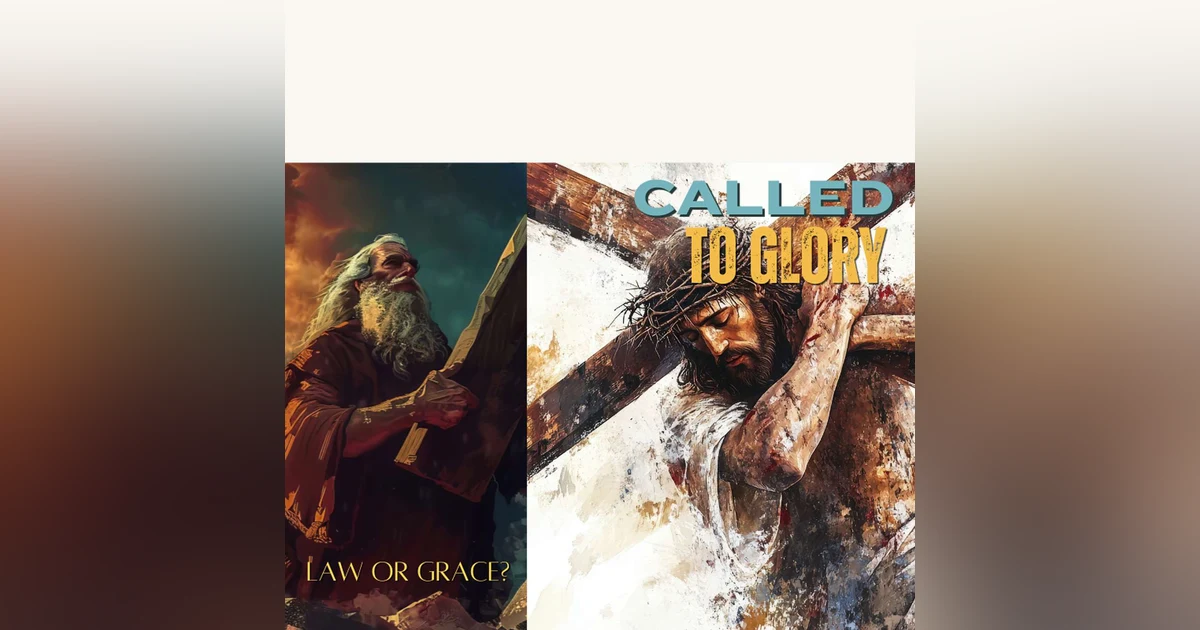
Part 1 of "Moses, Christ or the Law of Love?" Welcome to “Called to Glory,” the cutting-edge weekly podcast dedicated to helping you know Christ, the power of His resurrection and the fellowship of His sufferings. In this series, we’re going to answer one of the most important and hotly debated questions in all of Christianity. And, for that matter, Messianic Judaism in all of its various forms. What law are we under as blood-bought disciples of Christ? At first blush, th...


 RSS Feed
 Part 1 of "Moses, Christ or the Law of Love?"
Welcome to “Called to Glory,” the cutting-edge weekly podcast dedicated to helping you know Christ, the power of His resurrection and the fellowship of His sufferings.
In this series, we’re going to answer one of the most important and hotly debated questions in all of Christianity. And, for that matter, Messianic Judaism in all of its various forms.
What law are we under as blood-bought disciples of Christ?
At first blush, that may seem like a no-brainer as I think most believers would readily agree it’s the Law of God! Which of course is absolutely correct. After all, one of the great promises of the New Covenant is that God will place His law in our minds and write it on our hearts. And if that’s as far as you care to take it, everyone can generally get along just fine.
However, the minute you start asking exactly what that means and looks like in real life – not to mention when we all stand before Christ as Judge - it’s a very different story altogether! If you’ve been a believer for any length of time, you know exactly what I’m talking about. There are almost as many opinions about this as there are versions of the Bible! It’s literally a theological and spiritual minefield. The good news, however, is it doesn’t have to be this way.
The truth is God has committed all judgment to the Son and the Bible declares that He will judge everyone – Christian, Jew or otherwise – not only according to what we do, but also according to our motives, thoughts and even our words. Paul - the apostle of grace – left no doubt about this when he wrote that God “will render to each one according to his deeds: eternal life to those who by patient continuance in doing good seek for glory, honor, and immortality; but to those who are self-seeking and do not obey the truth, but obey unrighteousness — indignation and wrath, tribulation and anguish, on every soul of man who does evil, of the Jew first and also of the Greek; but glory, honor, and peace to everyone who works what is good, to the Jew first and also to the Greek.”
Yes, God most certainly is love but the Bible also declares that the foundation of His throne is righteousness and justice. He is just as concerned with holiness, justice and righteous behavior as He is with mercy, grace and forgiveness.
So in light of the apostle John’s warning that, “He who says, “I know Him,” and does not keep His commandments, is a liar, and the truth is not in him,” I think we would all do well to get this right. Fortunately, God has not hidden the ball from us and neither has He shrouded this in such mystery that no one can possibly understand it. Just as no prophecy of Scripture is of any private interpretation, there is only one correct answer to this question and praise the LORD, He has not left us to our own devices to figure it out.
Join me as we take a quick look at some of the main schools of thought about this in Christianity and Messianic Judaism before answering this most important question:
What commandments was Christ referring to when He said, “If you love Me, keep My commandments”?
Soundtrack music:
"Awakening" by LNDÖ
"Revolution" by Shimmer
"The Heir" by Emmanuel Jacob
Scripture taken from the New King James Version®. Copyright © 1982 by Thomas Nelson. Used by permission. All rights reserved.
Yes, God most certainly is love, but the Bible also declares that the foundation of his stone is righteousness and justice. He is just as concerned with holiness, justice, and righteous behavior as he is with mercy, grace, and forgiveness. So in light of the Apostle John's warning that he who says I know him and does not keep his commandments is a liar, and the truth is not in him, I think we would all do well to get this right. Fortunately, God has not hidden the ball from us, and neither has he shrouded this in such mystery that no one can possibly understand it. Just as no prophecy of Scripture is of any private interpretation, there is only one correct answer to this question. Praise the Lord. He has not left us our own devices to figure it out. You see, both the Old and New Testaments are full of exhortations, instructions, examples, and yes, commandments that show us exactly what it means to love God and love our neighbor as ourselves. And don't let any slew talking preacher deceive you with empty words and flattery. Christ did not lower the bar. He restored the law of God to its original glory and power, and in doing so, he raised the standard of righteousness to a level infinitely higher than anything we see in the law of Moses, or for that matter, anywhere else. And it's much more difficult, demanding, and glorious than what multitudes of professing believers have been taught, or for that matter, want to believe. There's a very good reason why Christ said, Narrow is the gate and difficult is the way which leads to life, and there are few who find it. Welcome to Call to Glory, the cutting edge weekly podcast dedicated to helping you know Christ, the power of his resurrection, and the fellowship of his sufferings. If this is your first time tuning in, please be sure to like, share, comment, and subscribe. In this episode, we're going to answer one of the most important and hotly debated questions in all of Christianity, and for that matter, Messianic Judaism in all of its various forms. What law are we under as Boybought Disciples of Christ? At first blush, that may seem like a no-brainer, as I think most people would readily agree it's the law of God, which of course is absolutely correct, after all. One of the great promises of the new covenant is that God will place his law in our minds and write it on our hearts. And if that's as far as you care to take it, everyone can generally get along just fine. You know, I'm okay, you're okay. However, the minute you start asking exactly what that means and looks like in real life, not to mention when we all stand before Christ as judge, it's a very different story altogether. If you've been a believer for any length of time, you know exactly what I'm talking about. There are almost as many opinions about this as there are versions of the Bible. It's literally a theological and spiritual minefield. The good news, however, is it does not have to be this way. Let me explain. Jesus Christ is not only the Word of God and only begotten Son of God, he is also the promised Son of David and prophet greater than Moses. He is the one to whom we're to listen. As Moses himself told the children of Israel, the Lord your God will raise up for you a prophet like me from your midst, from your brethren, him you shall hear. What Christ said is therefore the ultimate, complete, and full revelation of the mind, heart, soul, spirit, righteousness, holiness, character, nature, and will of the one true invisible God. In his own words, heaven and earth will pass away, but my words will never pass away. It's that simple. So with that in mind, the million dollar question we're going to ask and answer is which commandments Christ was referring to when he said, If you love me, keep my commandments. Stay with me till the end, as there's a very good chance it's not what you've heard or been taught, and please do not let any smooth talking preacher deceive you. God has committed all judgment to the Son, and the Bible declares that he will judge everyone, Christian, Jew, or otherwise, not only according to what we do, but also according to our motives, thoughts, and even our words. Paul, the Apostle of Grace, left no doubt about this when he wrote that God will render to each one according to his deeds. Eternal life to those who by patient continuance and doing good seek for glory, honor and immortality. But to those who are self-seeking and do not obey the truth, but obey unrighteousness, indignation and wrath, tribulation and anguish on every soul of man who does evil, of the Jew first and also of the Greek. But glory, honor, and peace to everyone who works what is good, to the Jew first, and also to the Greek. That's the New Testament, brother, and the scripture cannot be broken. Yes, God most certainly is love, but the Bible also declares that the foundation of his stone is righteousness and justice. He is just as concerned with holiness, justice, and righteous behavior as he is with mercy, grace, and forgiveness. So in light of the apostle John's warning that he who says I know him and does not keep his commandments is a liar and the truth is not in him. I think we would all do well to get this right. Fortunately, God has not hidden the ball from us, and neither has he shrouded this in such mystery that no one can possibly understand it. Just as no prophecy of Scripture is of any private interpretation, there is only one correct answer to this question. Praise the Lord. He has not left us our own devices to figure it out. Let me explain. In American jurisprudence, a law is constitutionally invalid if a person of common intelligence has to guess at what it means. Laws are therefore carefully drafted to give everyone fair notice of what actions will be considered a crime before they act. This is rooted in the constitutional principle of due process or fundamental fairness. Think about it. If man's law, as imperfect as it is, must be sufficiently clear and precise so that a person of common intelligence doesn't have to guess at its meaning, how much more so will God's perfect law be? And by the same token, if man's law, as imperfect as it can be, is required to give fair notice of what actions will be considered a crime, why would anyone in their right mind think our heavenly Father, not to mention Christ as righteous judge, would do any less, just as it is written, shall not the judge of all the earth do right? So make no mistake, we most certainly can know what God requires of us, but there is a caveat. We must come to him with an honest heart, a genuine spiritual humility, and a sincere love for the truth. You see, for centuries theologians and Bible teachers have clouded this question with false assumptions, pagan philosophy and thought, traditions of men, and outright heresy. Among these are teachings such as no one could ever be righteous under the law of Moses. No one could keep the law, so Christ had to keep it for us. Christ came to set us free from the bondage of the law. The law of Moses has been nailed to the cross and therefore abolished. Christ came to point us back to the Torah. Being led by the Spirit means we're no longer under any law. One law for Jews and another law for Gentiles. Law of any kind is antithetical to grace. Works of any kind are antithetical to faith, and anything we do in obedience to God's law is an attempt to earn our salvation or add to Christ's finished work on the cross. And these in turn have led to all kinds of errors such as the Marcionite heresy of the wrathful, vengeful God of the Old Testament versus the loving, merciful God revealed by Christ, pitying Moses against Christ, the Old Testament against the New Testament, Jew versus Gentile in Christ, Paul against James, and of course, law versus grace, which in turn has led to endless debates, arguments, and controversies about genealogies, whether the law of Moses has been abolished, whether Christ changed the law of Moses, whether the same law applies equally to Jewish and Gentile believers, whether we're still required to keep the Sabbath, whether we're only under the Ten Commandments or perhaps only what some call the moral laws of the Torah, whether the only obedience that's acceptable to God is keeping the law of Moses, whether Christ did everything for us at the cross, whether all God requires of believers is to love Him and love your neighbor as yourself, or whether we're under any law at all, that's just the tip of the iceberg. As a result, multitudes of sincere and non so sincere believers have been drawn away from the narrow path that leads to life and bewitched into following other paths, masquerading as the narrow path. Rather than edification, these in turn lead to endless arguments, contentions, debates, strife, divisions, and fights about genealogies, Jewish fables, commandments of men, and of course the law. To make matters worse, many other sincere and not so sincere believers are so turned off by all of this infighting and division that they go all the way to the opposite extreme and simply check out, neither of which glorify the Lord. You have to admit it's a brilliant and highly effective strategy on the part of the devil, his fifth column inside the church, if you will. And multitudes of believers have fallen for it, hook, line, and sinker. You see, Satan loves religion. It's his masterpiece, and I assure you, he feels right at home in many churches and fellowships. So let's take a quick look at some of the main schools of thought about this in Christianity and Messianic Judaism as we answer this most important question. What commandments was Christ referring to when he said, If you love me, keep my commandments. If this is your first time tuning in, please be sure to like, share, comment, subscribe, and ring the bell so you can be notified whenever we post new episodes. If you like what you've heard today, please also leave a review wherever you're listening to this podcast. Tell us what you loved about this episode, how it may have helped or encouraged you, or you can simply leave a comment about any other topics you'd love to hear us cover in the future. Finally, remember to always keep your lamps trimmed lit and full of oil. Shalom and see you next time.